1. Match the connector and power together
On ChargingStops, a connector preference and a minimum-power filter must match the same charging configuration. A site with CCS at 50 kW and another connection at 250 kW will not qualify as CCS at 150 kW. Unknown connector-specific power cannot pass a strict minimum.
A plug shape alone does not establish that your vehicle may use a network, or that an adapter is supported. This release offers connector preferences; it does not maintain a vehicle-compatibility database. Use your vehicle maker and network’s current guidance for eligibility.
2. Read the access line
Public access, hotel guests, customers only and unknown access mean different things. A charger can be listed as operational while sitting behind a gate or inside a guest-only garage. The station’s access notes matter even if the connector matches.
Charging hours describe the charging site. Venue hours describe the store, hotel or attraction. A restroom or café can have a third schedule. We keep these separate where evidence supports it.
3. Look beyond the energy price
Read the dated tariff text and check the current price with the network before starting. Parking, access, session and overstay charges may sit outside an energy rate. We preserve source wording when the components do not support an accurate comparison.
“Free charging” in a source is not a promise of free parking. A blank price means the price is unlisted here; it does not mean zero.
4. Separate inventory from availability
Listed operational means the source records the equipment as operational. It does not tell us whether a port is occupied now. ChargingStops does not provide live occupancy in this release.
Several connector cables may share one usable charging port. We preserve the distinction between the destination, network installation, charging unit, port and connector configuration. Where the source does not identify individual ports, we leave that detail unknown.
5. Check the date and the arrival note
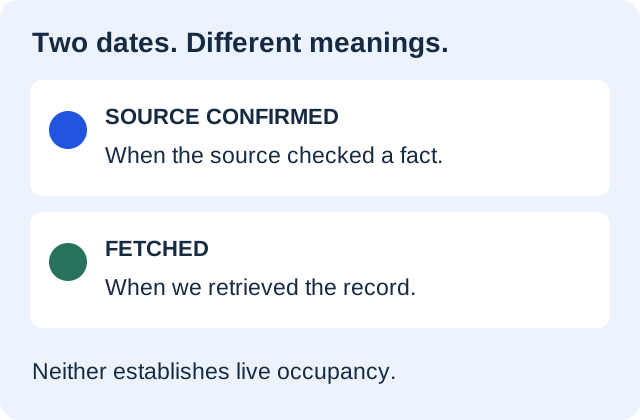
A source-confirmed date describes the source’s verification. A fetched date tells you when we retrieved the record. A venue page reviewed today may still contain older information. These dates are not interchangeable, and none is a real-time service guarantee.
Read the address and entrance notes, open directions, and check alternatives. Distances shown by this directory are straight-line distances unless explicitly described otherwise. ChargingStops does not calculate guaranteed battery range or battery-aware routes.
Put the checks to work
Open REI Denver and compare the charging configurations with its separate store hours.
If a factual detail is wrong or stale, prepare a correction with what you observed and a useful source. Corrections require review before a listing changes.